
'We participate in the design/development of components and systems for electric vehicles, internal combustion engines, and hybrid vehicles.'
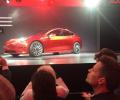
The vehicle will not be available until end-2017, or later.

Model 3 received 180,000 orders worldwide.
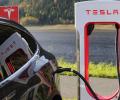
In 2024 alone, South India saw the highest rise in sales in the luxury segment, with Tamil Nadu reportedly registering a 19.3 per cent increase in premium car registrations from 2022-23

Since April 4, around 35 importers in India have either not received any shipment of the magnets or have not been granted the import licences by China.
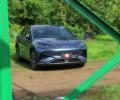
The BYD Sealion 7 offers instant, exhilarating power, effortlessly pinning you to your seat with a 0-100 km/h sprint in just 4.5 seconds -- a performance proudly showcased on its rear badging.

Part-I of this three-part series dives into Delhi-NCR's SPR, Sohna, Dwarka Expressway, and Jewar Airport leading the charge.

Hero MotoCorp is expecting its electric vehicle (EV) business to break even once it reaches monthly sales volumes of 25,000 to 30,000 units, which is a couple of years away, Chief Financial Officer (CFO) Vivek Anand said on Tuesday. "This year, in 2024-25 (FY25), if I really look at my EV performance, our volumes have grown by 200 per cent," Anand told analysts during the company's post-results conference call.

'In April, we saw a 10 per cent growth in our own volumes.'
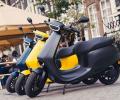
Ola Electric is moving the delivery for the first batch of its electric scooters to between December 15 to the end of the month, a two- to four-week delay from its earlier schedule, due to a shortage of chipsets and electronic parts. The first batch of deliveries were scheduled for November 30 but the company decided to delay them after a meeting between its factory team and the global supply chain on Saturday. It became clear that the late delivery of chips and electronic parts was only 'getting worse', sources told Business Standard. Ola has apologised to customers for the delay and said it is "ramping up production as fast as we can so that you can get your Ola S1 at the earliest". It has stopped taking any new bookings until the chip shortage has eased, say sources.

Sales of electric vehicles (EVs) in July touched 178,948 units, marking the highest monthly sales this financial year. This represents a 27.9 per cent increase from June, which saw 139,905 units sold, according to the Vahan data from the Ministry of Road Transport and Highways. The strong performance in July contributed to more than one million being sold in the first seven months of the calendar year.

According to research by IHS Markit, for an ecosystem still grappling with infrastructure issues -- the high cost of EVs and a greater OEM (original equipment manufacturer) focus on electrifying two-wheelers and commercial vehicles first -- the share of such vehicles is expected to be 4 per cent by 2030, reports Pavan Lall.

Why is Shailesh Chandra, managing director of Tata Motors Passenger Vehicles and Tata Passenger Electric Mobility, not worried about the competition?

Under the scheme, the government will provide financial incentives for each electric vehicle sold in India during the remaining part of the 11th Plan.
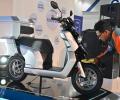
Based on discussions with stakeholders, the ministry is proposing to allocate Rs 26,400 crore for FAME-III subsidy alone with electric two wheelers getting around Rs 8,158 crore, electric buses Rs 9,600 crore and electric three-wheelers Rs 4,100 crore, according to sources in the know. Along with some other components like setting up an innovation fund and money for testing , the total allocation could cross Rs 33,000 crore, estimates suggest.

What transpired during that drive was one of the most compelling investment pitches made by an Indian state in decades.

Hyundai aims to raise exports to 30% of output by FY30 as domestic sales slow; six EVs among 26 product launches planned as part of long-term growth strategy.

More than 30 technology startups, collectively valued at $100 billion, are poised to go public by 2027, signalling a potential rebound in India's stock market activity, according to a report by investment bank The Rainmaker Group. Walmart-owned Flipkart, financial technology (fintech) leader PhonePe, SoftBank-backed Lenskart, Razorpay, Zetwerk, and Meesho are among the top companies preparing to go public in India.

The state is also the biggest market for TVS, another incumbent player, and together with Bajaj Auto, they accounted for 88 per cent of Maharashtra's total electric scooter sales last month. As many as 8,417 units were sold in Maharashtra in September. Bajaj Auto's contribution was 4,048 vehicles and that of TVS was 3,389, according to model- and state-wise data from the Society of Indian Automobile Manufacturers (Siam).

To come up with first EV by 2025, expects market to grow two to three-fold in the next ten years.

Days after saying that there is no need for subsidies to achieve greater penetration of electric vehicles (EVs), Union Minister of Road Transport and Highways Nitin Gadkari on Monday clarified that the view is his own, but any official call on EV subsidies is not one that he can take.
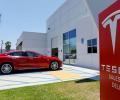
'Gujarat is the frontrunner at present.'
'However, Tamil Nadu's robust automobile ecosystem and Telangana's aggressive incentives make them strong contenders.'
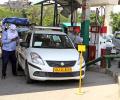
'Primary buyers are commercial taxi and fleet operators and small businessmen.' 'CNG prices have been remarkably stable unlike petrol.'

Firodia talked about his plans for the EV-components business, and the components business at large for the group

'This tragedy will not be the last -- you shall witness another tomorrow, perhaps another the day after, and increasingly more.'
Govt will save Rs 30,000 cr in fuel by giving Rs 14,000 cr subsidy to industry for making electric vehicles.

India's Foreign Secretary Vikram Misri has underscored the importance of not equating the victims and perpetrators of terror attacks, highlighting the need for global unity in combating terrorism. Speaking at Raisina Tokyo 2025, Misri expressed appreciation for Japan's support following the recent terror attack in Pahalgam, India. He also cautioned against the trend of some Western countries hyphenating India and Pakistan in the context of their recent military confrontation. Misri further outlined India's economic aspirations and its commitment to becoming a factor of stability in a turbulent world.
Brazilian authorities have rescued 163 workers from conditions similar to 'slavery' at a construction site for a factory of Chinese electric vehicle company Build Your Dreams (BYD) in Camacari, Bahia.
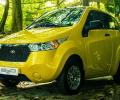
The e2o is manufactured by Mahindra Reva Electric Vehicles.

As Modi's government embarks on its third term, apart from ensuring these schemes boost India's green mobility, addressing bottlenecks like battery swapping and meeting PLI deadlines are likely to be the government's major tasks.

'From data on enquiries, we can build what we call a data lake or a data warehouse where data is classified into various cohorts and then we use AI and ML tools to predict demand down the line.'
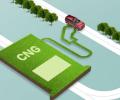
Maruti Suzuki India (MSIL) will hold discussions with the Centre and state governments on how the production of compressed biogas (CBG), which can be used in vehicles that run on compressed natural gas (CNG), can be expanded in the country, its majority shareholder Suzuki Motor Corporation (SMC) said. The demand for CNG vehicles has been rising significantly in the country. MSIL sold 145,000 CNG vehicles in the first quarter of 2024-25, marking a 28.3 per cent year-on-year (Y-o-Y) growth.
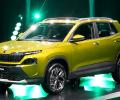
Skoda Auto India, the Czech carmaker that has recently found success with its compact SUV Kylaq, says it remains committed to developing a fully localised electric vehicle (EV). The EV will be manufactured at its Chakan facility for both Indian market and exports.

Electric vehicle (EV) sales in India topped the 1 million mark in less than nine months in 2023, a milestone that took an entire year in 2022. According to data from the Ministry of Road Transport and Highways' Vahan Dashboard, 1,037,011 EVs were registered with regional transport offices till September 19, accounting for 6.4 per cent of the total automobile sales in the country this year. The sales surge can be attributed to increased individual purchases as well as business-to-business (B2B) acquisitions by EV fleet operators, industry sources said.

The charging infrastructure expansion includes the setup of over 600 DC charging stations by 2030 (including company-owned and company-operated ones) in addition to partnerships with over 10,200 charging points, collaborating with operators like Shell, Charge Zone, and Statiq.

Ola Electric has finalised its second phase of expansion, under which it will increase its plant capacity fourfold - from 1 million two-wheelers per annum to 4 million. This will also include motorcycles, said a top executive of the company. It will also build a plant with a 5 Gwh of advanced chemistry cell battery storage capacity in the same super factory located on the outskirts of Bengaluru.

The Tamil Nadu government on Tuesday cleared the Rs 13,180 crore project by Yuzhan Technology, part of Taiwan's Foxconn Group, at Kancheepuram. The unit is reportedly expected to assemble smartphone display modules, which will be one of the first such units to cater to Apple's growing presence in the country. The unit is expected to generate at least 14,000 jobs. Of the 14 existing manufacturing units in the Apple supply chain, seven are based in Tamil Nadu.
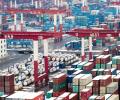
India's trade deficit with China neared $100 billion in FY25, amid escalating concerns of dumping, data released by the commerce department on Wednesday showed. Chinese imports rose by 11.5 per cent to $113.45 billion, while outbound shipments to the neighbouring country saw 14.5 per cent contraction to $14.2 billion.
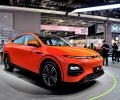
A quarter of the car sales in China are of electric vehicles; domestic brands command 81% of EV sales in the country.
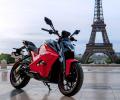
The company is targeting countries like Germany, Italy, France, Spain, Portugal, and the UK which account for over 70 per cent of Europe's two-wheeler volumes.
